
Deal
Transaction

Austrian private radio share deals: prior notice and aggregation

When Austrian private radio share transfers exceed 50%, who must notify the regulator in advance and what section 22(5) means for closing.

BRANDAUER Rechtsanwälte
Your law firm

BRANDAUER Rechtsanwälte

Salzburg law firm for corporate, company and transaction law

Every transaction is handled by a coordinated team of lawyers, legal staff and specialists. In company acquisition matters we look at structure, contract, tax and liability together.

3 October 2026 · Mag. Bernhard Brandauer, Rechtsanwalt

Buying an Austrian private radio broadcaster can trigger a specific media-law notice before shares are transferred. Section 22(5) PrR-G covers a disposal of more than 50% of the relevant shares to third parties and requires multiple transfers to be aggregated.

The calculation uses the statutory reference shareholding. Purchase price and general merger-control turnover tests belong to different parts of an acquisition review.

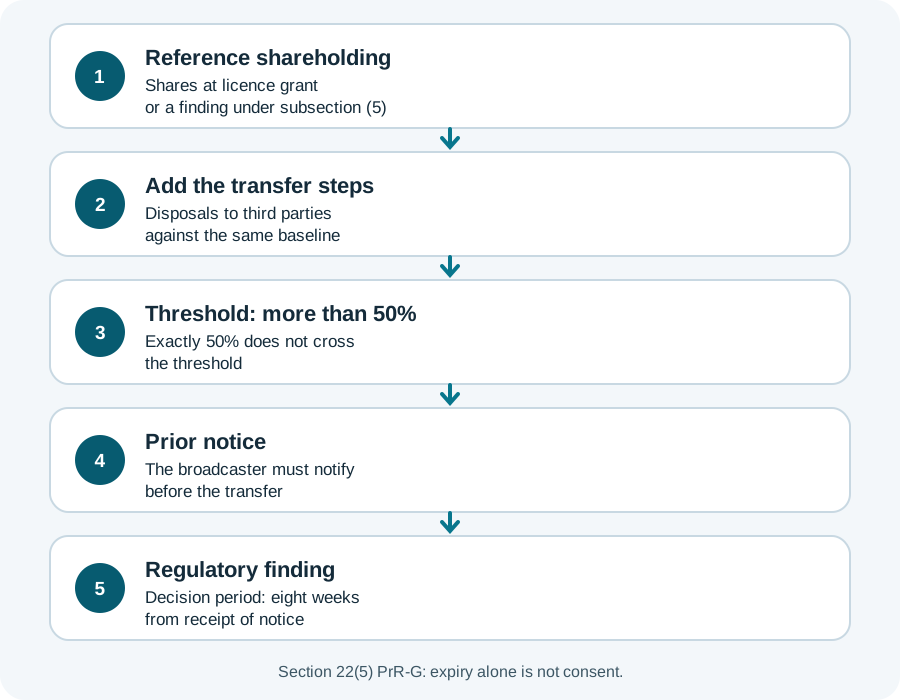
Section 22(5) PrR-G process: establish the reference shareholding, add transfers, give prior notice and review the regulator finding.

This guide explains which steps count, who must notify the regulator and how the resulting finding fits into the closing timetable.

Quick check

How does the PrR-G threshold affect your deal?

Identify the licensed entity, reference shareholding and planned transfers. The result is an orientation tool, not a review of the transaction documents.

Already know you want to get in touch? Go straight to the enquiry form.

01 Question 1

Does the target hold a licence as an Austrian private radio broadcaster?

Section 22(5) PrR-G applies to the broadcaster and its licence. Confirm the legal entity named in the licence decision.

All paths at a glance

Overview of all answers.

01

The licensed entity has not yet been confirmed.

Identify the legal entity named in the private radio licence and compare it with the target in the sale agreement. Section 22(5) concerns shares in the broadcaster. A group name or radio brand does not establish which company holds the licence.

The licence decision and current company register extract provide the starting point for deciding whether this advance-notice rule is relevant to the proposed transaction.

02

The stated total does not exceed the 50% threshold.

Record that every planned transfer to a third party was counted against the same reference shareholding. Exactly 50% is not more than half under subsection (5). This result addresses only the special advance notice in section 22(5).

Other direct or indirect changes in ownership or membership may still engage the separate reporting and update rules in section 22(4).

03

The baseline or the combined amount remains uncertain.

Prepare a share table for the date of the licence grant or a determination under subsection (5). List every planned disposal to a third party with the share amount and intended effective date. Percentages taken from different ownership snapshots cannot be added without checking the underlying figures.

The statute requires multiple transfers to be aggregated. Dividing a transaction into separate closing steps therefore does not remove the threshold question.

04

There is no confirmed advance notice for the planned step.

Section 22(5) places the obligation to notify the regulatory authority before the transfer on the broadcaster. Confirm with the licensed entity whether it filed a notice and whether the notice covers the transfer now contemplated.

The sale agreement can allocate cooperation, documents and procedural tasks. It does not change the statutory addressee.

05

The finding does not clearly cover the proposed closing.

Compare the authority decision with the parties, share amount and reference point used for the filing. If the transaction documents changed after notification, the earlier filing alone does not establish that the revised step was assessed.

Section 22(5) gives the regulator eight weeks to make its finding. The provision does not treat expiry of that period as deemed approval.

06

A finding appears to cover the planned transfer.

Keep the closing within the shares and steps covered by the finding. Check for changes to the buyer, reference shareholding or transfer schedule since the notice was filed.

The finding under section 22(5) addresses the review set out in that provision. Other transaction conditions and regulatory requirements remain separate questions.

The eight-week period is the deadline for the regulator to make its finding. Section 22(5) does not describe expiry of that period as consent to the transfer.

Which shareholding is the reference point?

Section 22(5) PrR-G refers to the shares held by the broadcaster when its licence was granted or at a finding under that subsection. If more than 50% of those shares are disposed of to third parties, the broadcaster must notify the regulatory authority before the transfer. The statutory reference point is the basis for measuring the share percentage.

For example, assume the reference shareholding consists of 100 shares. Transfers of 51 of those shares to third parties exceed the threshold. A transfer of exactly 50 shares does not exceed half under the wording of subsection (5). The comparison is based on the share amount, not the purchase price.

Keep the ownership table for the relevant date in the transaction file. Use the same baseline for every percentage in the sale documents. If share classes, intermediate steps or a changed ownership structure make the figures unclear, resolve the calculation before signing.

How are multiple transfers aggregated?

The second sentence of section 22(5) requires multiple transfers to be counted together. The threshold review therefore looks at the full transaction plan, rather than only the largest individual agreement. Staggered closing steps do not by themselves remove the aggregation question.

Using the example of 100 reference shares, a first disposal of 26 shares and a second disposal of 25 shares add up to 51. This calculation assumes the same reference shareholding for both steps and a transfer to third parties. Percentages taken from different ownership dates need to be reconciled first.

Prepare a schedule showing each seller, recipient, share amount, reference date and expected effective date. Update it when the terms change. The broadcaster can then see whether a later step takes the combined transfer above the statutory threshold.

Who must file the advance notice?

The statute assigns the duty to the broadcaster. It must notify the regulatory authority before a transfer covered by subsection (5). The purchaser is not named as the statutory notifier. The sale agreement can organise cooperation, documents and responsibilities between the parties, while leaving the legal addressee unchanged.

Subsection (4) also contains reporting rules for direct or indirect changes in ownership or membership compared with the position when the licence was granted. A change that could affect the assessment under sections 7 to 9 must be reported within four weeks after it takes effect. Other changes can be reflected in an annual update by 31 December. Subsection (5) additionally addresses the specific share-transfer threshold and requires notice beforehand.

Keep the two reporting routes distinct. A post-effective-date update under subsection (4) does not replace the prior notice required by subsection (5). A transaction notice under subsection (5) does not automatically discharge other ongoing reporting duties. Retain the filing date and the share schedule sent to the authority.

What does the regulator decide and when?

Within eight weeks after receiving the notice, the regulatory authority must determine whether the requirements in section 5(3) and sections 7 to 9 are met under the changed circumstances. The review concerns the broadcaster and its statutory licence requirements.

Eight weeks is the decision period set by the provision. Its expiry alone does not establish consent or decide whether the proposed closing is lawful. The procedural status, the authority finding and any other applicable rules must be considered for the specific transaction.

Build the timetable around the notice actually filed and the transaction it describes. If the parties, share amounts or closing steps change after filing, the earlier notice alone does not establish that the revised plan was assessed.

How should the sale agreement handle the finding?

The sale agreement should identify the reference shareholding, all planned transfers and responsibility for the notice. It can allocate cooperation by the buyer, ownership records and the process for later changes. These are contract-design choices; subsection (5) does not prescribe a model clause.

The finding must match the step that the parties actually complete. Under section 22(5), the broadcaster’s licence is to be revoked after a public oral hearing if it transfers shares contrary to the finding. The statutory consequence depends on that specific conduct. The threshold crossing alone is not stated as an automatic ground for revocation.

The media-law ownership review sits alongside other due diligence. Questions about the premises and environmental requirements are covered in the separate guide to operating permits and environmental obligations. IT risks are addressed in the guide to cybersecurity and NIS2 due diligence. Each has its own tests alongside the PrR-G review.

Frequently asked questions

Questions about Austrian private radio share deals

Does a transfer of exactly half the shares trigger prior notice? +
Section 22(5) refers to a disposal of more than 50%. Exactly 50% is not above that threshold. Separate reporting duties, including subsection (4), must still be considered.
Are several smaller transfers counted together? +
Yes. The second sentence of subsection (5) requires multiple transfers to be aggregated against the same statutory reference shareholding. Staggering the steps does not remove that calculation.
Who has the legal duty to notify the regulator? +
The broadcaster has the statutory duty. The buyer and seller can agree who prepares records and coordinates the filing, but that agreement does not change the addressee named by the statute.
How does subsection (5) differ from the reporting rule in subsection (4)? +
Subsection (4) also covers direct or indirect ownership or membership changes compared with the position when the licence was granted. Depending on their effect, they are reported within four weeks after becoming effective or included in an annual update by 31 December. Subsection (5) requires advance notice for the specified share-transfer threshold.
Does the eight-week deadline mean the transfer is approved if no decision arrives? +
No such deemed approval is stated in subsection (5). The eight weeks are the period for the regulatory finding; expiry alone does not answer whether the transaction may close.
What if the broadcaster transfers shares contrary to the finding? +
Subsection (5) provides for revocation of the licence after a public oral hearing if the broadcaster makes a transfer contrary to the finding. It does not say that every transfer above 50% automatically leads to revocation.
Topics
private radioPrR-Gshare transfermedia lawownership change

Structuring a deal, reviewing a contract, securing the risks?

When buying a company, structure, review and contract decide. Call us directly or send an email, callback within one business day.

Contact

A direct line to the firm.

Address

BRANDAUER Rechtsanwälte GmbH Giselakai 51 5020 Salzburg